veranomotors

Buying a supercar is as much an investment decision as it is a passion purchase. While the thrill of driving a high-performance machine is undeniable, depreciation can turn your dream car into an expensive lesson. The question every supercar buyer faces: which brand holds its value best?
This comparison breaks down how Audi R8, Ferrari, and McLaren models stack up when it comes to value retention, ownership costs, and long-term investment potential. Whether you’re buying new, buying used, or exploring pre-owned supercars in Dubai, understanding these depreciation patterns helps you make smarter decisions – and avoid the mistakes that cost other buyers tens of thousands.
Understanding Supercar Depreciation
Before diving into specific models, it helps to understand how supercars depreciate differently from regular vehicles.
The First Year Drop: Most supercars lose 6–10% of their value in year one. This initial hit comes from the car transitioning from “new” to “used” regardless of condition or mileage. Some limited editions actually appreciate during this period, but those are exceptions.
The Three-Year Reality: Industry data shows supercars typically depreciate 16–25% over three years. This is actually better than luxury sedans (which lose 40–50%), but worse than limited-production exotics that often hold or gain value.
What Drives Depreciation: Several factors accelerate or slow supercar depreciation. Production numbers matter hugely – the more cars built, the faster depreciation typically occurs. Brand heritage plays a role, with Italian marques generally holding value better than German or British competitors. Reliability reputation affects resale values, as does the availability of newer models with updated technology.
The used supercar market today is well-stocked with options. A decade ago, buying a used Ferrari or McLaren meant hunting down rare examples. Increased production has since widened the market, which pushes prices down – but also creates serious buying opportunities for those who know where to look.
Audi R8: The Surprising Value Champion
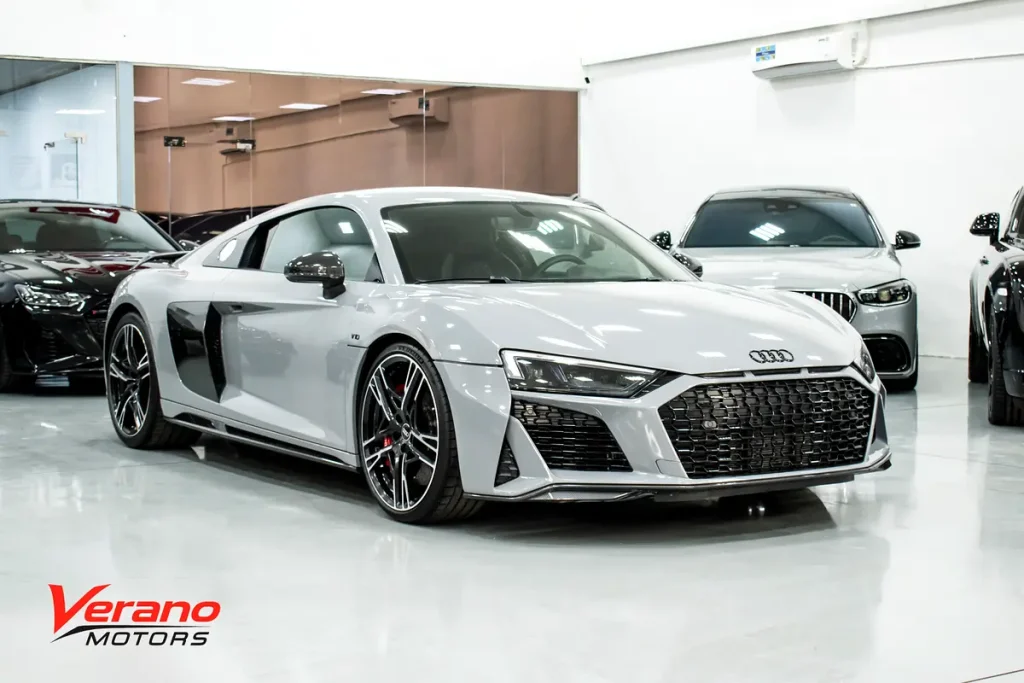
Depreciation Rate: 16–22% over three years
The Audi R8 consistently surprises analysts by holding value better than its exotic competitors. Despite being labelled a “German supercar,” the R8 defies expectations in the depreciation game – and it’s a model we know well at Verano Motors.
Why R8s Hold Value:
The R8’s value retention comes from several smart decisions Audi made. First, production numbers stayed relatively controlled compared to rivals, maintaining exclusivity without going full limited-edition. Second, the shared platform and parts with the Lamborghini Huracán give it genuine exotic credentials at a more accessible price point. Third, reliability has been excellent – R8s are known as daily-drivable supercars that won’t leave you stranded.
The R8 appeals to a wider buyer base than pure exotics. Buyers who want supercar performance without Ferrari maintenance costs or McLaren reliability concerns often land here. That sustained demand supports resale values remarkably well.
V8 vs V10 Value Retention:
The V10 models hold value significantly better than V8 variants. V10 R8s depreciate around 16% over three years, while V8 models can drop 20–25%. The V10’s exotic engine note, greater power output, and closer connection to the Lamborghini Huracán make it more desirable long-term.
Manual transmission V8 R8s represent an interesting niche. These have actually appreciated slightly in recent years as collectors seek the last manual supercars – though they’re rare, so patience is required.
Best R8 for Value:
2017–2020 V10 Plus models offer the sweet spot. They’ve absorbed the bulk of initial depreciation but still deliver modern performance and styling. Expect to find low-mileage examples in the AED 510,000–660,000 range, down from original prices of AED 660,000–770,000. That’s 15–25% depreciation – excellent for a supercar.
Spyder models hold value slightly better than coupes, contrary to most supercars. The hardtop convertible mechanism and lower production numbers create additional desirability.
At Verano Motors: We currently have an Audi R8 Performance 2022 (Low Mileage) with just 6,600 km – a V10 example that has already absorbed its steepest initial depreciation. Priced at AED 519,900.
Ferrari: The Prancing Horse Premium
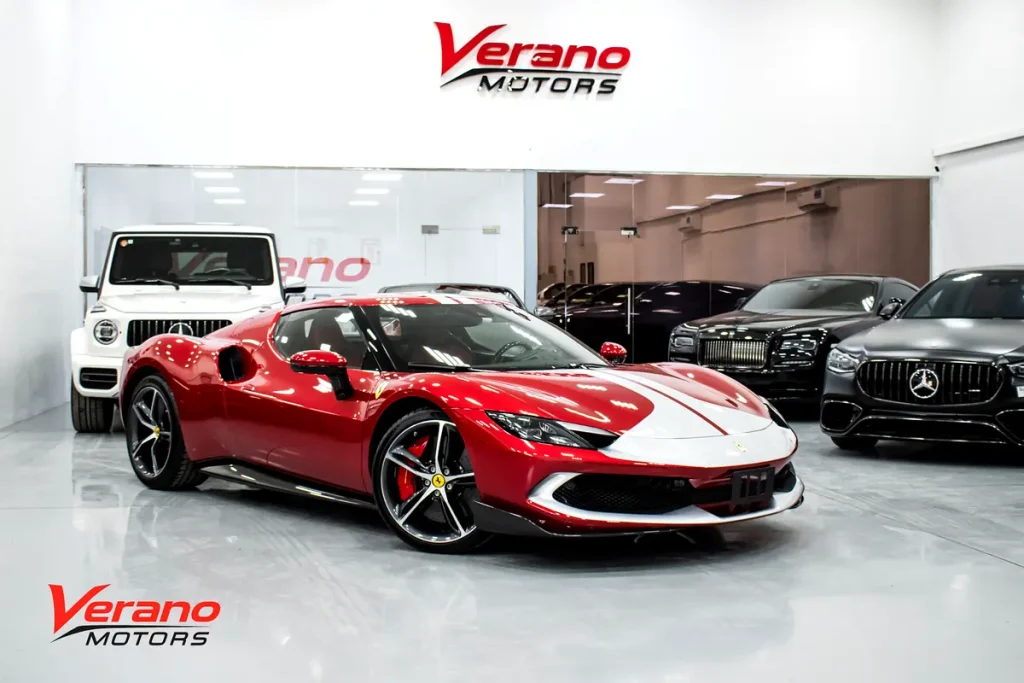
Depreciation Rate: 16–23% over three years (varies widely by model)
Ferrari’s legendary brand commands premium pricing, but does that translate to better value retention? The answer is nuanced.
Why Ferraris Hold Value:
Ferrari’s strict production controls and brand mystique create sustained demand. The company deliberately builds fewer cars than the market would support, maintaining exclusivity. Ferrari also controls its used market more actively than competitors, with certified pre-owned programmes and dealer networks that support values.
The emotional appeal of Ferrari ownership can’t be understated. Buyers pay premiums for the prancing horse badge that go beyond pure performance figures. This brand loyalty creates a floor under used Ferrari prices that other manufacturers simply don’t enjoy.
Model-Specific Depreciation:
Not all Ferraris depreciate equally. The 488 GTB depreciates around 16–18% over three years, performing similarly to the R8 V10. The 488 Pista (limited production, track-focused) actually appreciated in its first year and holds value extraordinarily well.
The F8 Tributo models are showing early indicators of 15–17% three-year depreciation, benefiting from being the last of a particular turbocharged V8 era for the brand.
The 458 Italia (naturally aspirated V8 predecessor to the 488) has already bottomed out and is beginning to appreciate as collectors recognise it as the last naturally aspirated mid-engine V8 Ferrari. Prices for clean examples are climbing.
The Special Edition Factor:
Limited Ferrari models follow completely different rules. The 488 Pista, 812 Competizione, and SF90 XX all command premiums over MSRP in the used market – demonstrating Ferrari’s ability to create value through carefully managed scarcity.
Best Ferrari for Value:
2018–2020 488 GTB models offer solid value retention and are likely approaching their depreciation floor. The 296 GTB represents the next chapter – a hybrid-electric V6 that opens an entirely new era for the brand.
At Verano Motors: We stock both the Ferrari F12 Berlinetta (2015) and a Ferrari 296 GTB Assetto Fiorano (2024, 0 km) – covering both the collector-grade naturally aspirated era and Ferrari’s latest hybrid chapter. Browse our Ferrari listings for full specs and pricing.
McLaren: Performance Leader, Depreciation Loser
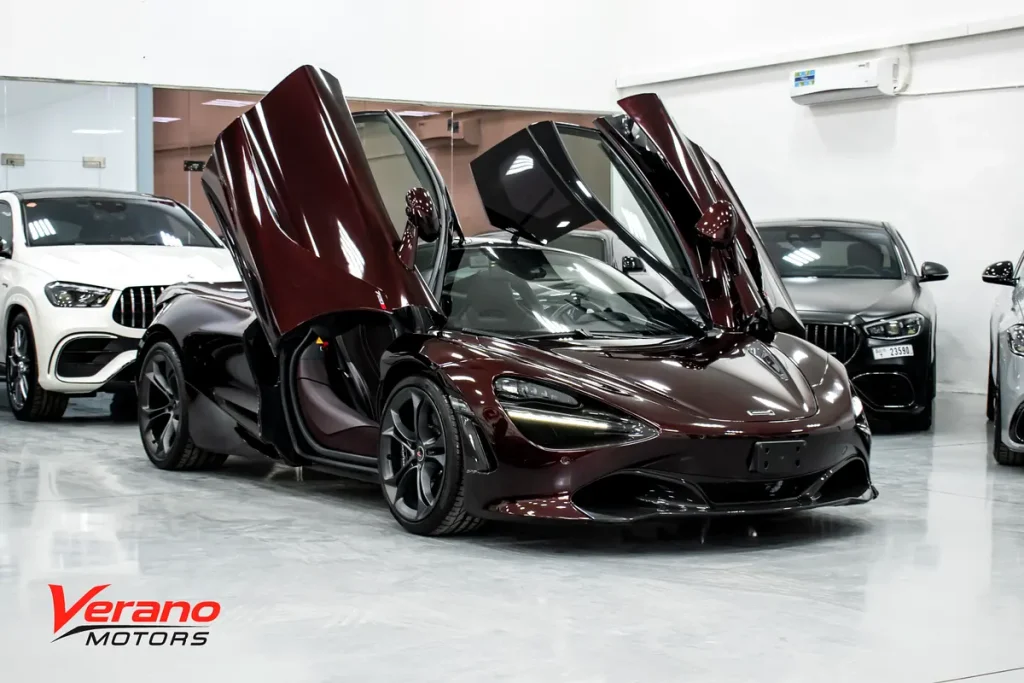
Depreciation Rate: 23–30% over three years
McLaren builds extraordinary cars that depreciate faster than almost any competitor. This creates a paradox: terrible value retention for the original buyer, but remarkable buying opportunities in the used market.
Why McLarens Depreciate Faster:
Several factors compound McLaren’s depreciation challenges. High production volumes during their rapid expansion (2012–2019) flooded the market with similar-looking models. The brand’s relative newness – compared to Ferrari’s 70+ year history – means less accumulated brand loyalty and emotional attachment from buyers.
Reliability perceptions, whether fair or not, also affect used McLaren values. Stories of electrical issues and costly repairs circulate widely. Whether your specific car has these issues is almost beside the point – the reputation affects all used McLaren values across the board.
Model-Specific Performance:
The 570S (entry model) depreciates 25–30% over three years. That’s painful for original buyers, but extraordinary for used buyers getting class-leading performance at a fraction of new pricing.
The 720S depreciates around 23–25% over three years. It remains one of the most impressive driving machines available at any price point – and a used example represents serious performance per dirham.
The 765LT (limited to 765 units globally) bucks the trend entirely, holding value well and appreciating in some cases. It proves McLaren can create value through genuine scarcity.
The Artura (hybrid V6) is McLaren’s forward direction – lighter, more efficient, and representing the brand’s hybrid future.
The Used Buyer Opportunity:
For used buyers, McLaren’s depreciation creates the best performance-per-dirham ratio in the supercar segment. Someone else has absorbed the steep early depreciation; you benefit from the result.
At Verano Motors: We have a McLaren Artura Performance (2023, Low Mileage) – just 18,000 km and priced at AED 679,000. The Artura represents McLaren’s hybrid future, and low-mileage examples like this are exactly what value-conscious buyers should be targeting. View all McLaren listings.
Head-to-Head Value Comparison
Let’s compare like-for-like scenarios with realistic numbers.
Scenario 1: Buying New, Selling After 3 Years
| Model | Purchase Price | 3-Year Value | Total Loss | % Depreciation |
|---|---|---|---|---|
| Audi R8 V10 | AED 660,000 | AED 547,800 | AED 112,200 | ~17% |
| Ferrari 488 GTB | AED 1,030,000 | AED 864,200 | AED 165,800 | ~16% |
| McLaren 720S | AED 1,100,000 | AED 847,000 | AED 253,000 | ~23% |
The percentages tell one story, but absolute dirhams matter too. Although the Ferrari’s depreciation percentage is similar to the Audi, the higher purchase price results in a significantly larger cash loss.
Scenario 2: Buying 3-Year-Old, Keeping 3 More Years
This is where smart buying pays off. Cars that have already absorbed initial depreciation tend to stabilise significantly.
| Model | Purchase Price | 6-Year Value | Total Loss | % Depreciation |
|---|---|---|---|---|
| Audi R8 V10 (2020) | AED 550,000 | AED 495,000 | AED 55,000 | ~10% |
| Ferrari 488 GTB (2019) | AED 864,000 | AED 790,000 | AED 74,000 | ~8.5% |
| McLaren 720S (2019) | AED 845,000 | AED 735,000 | AED 110,000 | ~13% |
Buying after the steepest initial depreciation dramatically improves your value equation. Ferrari’s brand strength shows here, with slower secondary depreciation than the others.
Ownership Costs Beyond Depreciation
Value retention is just one piece of the puzzle. Running costs significantly affect total cost of ownership.
Maintenance and Repairs:
Audi R8 maintenance is surprisingly reasonable for a supercar. Sharing components with the Lamborghini Huracán means some parts carry exotic pricing, but routine servicing at Audi dealers costs significantly less than Ferrari or McLaren. Expect AED 7,500–11,000 annually for normal use.
Ferrari maintenance is expensive but predictable. Annual services run AED 11,000–18,500, with major services every 3–5 years reaching AED 37,000–55,000. Parts are expensive, but Ferrari’s dealer network is well-established and familiar with the cars.
McLaren maintenance costs are high and less predictable. Annual services may cost AED 15,000–22,000, and unexpected repairs can be significantly more. The carbon fibre tub makes even minor accident repairs expensive.
Insurance in the UAE:
Insurance costs vary by driver profile, but general patterns hold. R8s typically insure for AED 11,000–22,000 annually, viewed as daily-drivable supercars. Ferraris run AED 18,500–36,700 due to higher values and replacement part costs. McLarens fall between at AED 14,700–29,400.
Fuel Economy:
All three are supercars, so fuel economy is not the priority. The R8 V10 returns roughly 15–18 MPG in miAxed driving. Ferrari 488s achieve similar figures at 16–19 MPG. The McLaren 720S manages 16–20 MPG thanks to lightweight construction – the difference in real-world running costs is minimal between the three.
Which Should You Buy?

The answer depends entirely on your priorities and timeline.
Buy Audi R8 If: You want the best balance of performance, value retention, and ownership costs. The R8 offers exotic car thrills with Audi reliability and better-than-expected resale values. It’s the smart choice for buyers planning to keep a car 3–5 years with an eye on minimising total ownership cost. It also works well as a daily driver – comfortable, dependable, and practical enough for regular use on Dubai’s roads.
Buy Ferrari If: Brand prestige matters and you can afford the premium. Ferrari ownership is about more than the machine – it’s entry into an exclusive community with events, cachet, and a heritage no other brand matches. Ferrari also makes financial sense if you’re targeting special or limited editions, which can appreciate rather than depreciate.
Buy McLaren If: You prioritise outright performance and are buying used. A used McLaren delivers more performance per dirham than almost anything else. If you’re comfortable accepting some reliability risk in exchange for cutting-edge technology and stunning capability, the used McLaren market offers exceptional value. Avoid buying new if depreciation concerns you – the first three years are brutal.
For Dubai Specifically: Dubai’s heat, speed regulations, and infrastructure all factor into the decision. The R8’s Audi reliability and extensive local dealer support make it particularly well-suited to the UAE market. At Verano Motors, we see consistent demand for all three brands – and our team can walk you through exactly which spec and model year makes sense for your situation.
Future Value Predictions
Audi R8: The second-generation R8 (2016–2023) will likely follow the first generation’s pattern: stabilise after initial depreciation, then gradually appreciate. V10 models should hold steady as they age into modern classic status. V8 models will depreciate further before finding a floor.
Ferrari 488/F8: The 488 is entering modern classic territory. As the final iteration before the 296 GTB hybrid, it represents the end of a purely combustion mid-engine V8 era for Ferrari. Expect values to stabilise, then slowly climb over the next decade – echoing exactly what the 458 Italia has done.
McLaren: The picture is more uncertain. If McLaren successfully manages production volumes and rebuilds reliability perception, values could stabilise meaningfully. Limited-production models (P1, Senna, 765LT, Elva) will appreciate as collectibles. Regular production models face a less certain trajectory.
Frequently Asked Questions
1. Which supercar has the best resale value overall?
The Audi R8 V10 offers the best combination of controlled depreciation (16–17%) and lower total dirham loss. Ferrari 488/F8 models depreciate at similar percentages but cost more upfront. McLaren depreciates fastest at 23–30%.
2. Is buying a used supercar better value than buying new?
Almost always yes. Buying a three-year-old supercar means someone else absorbed the steepest depreciation. You pay 75–85% of the original price but get 90%+ of the car’s useful life remaining. Values stabilise significantly after the first three years.
3. Do manual transmission supercars hold value better?
Yes, particularly for Audi R8 models. Manual gearboxes are increasingly rare in modern supercars, making them collectible. The R8 V8 manual has appreciated in recent years as the last of its kind.
4. Which costs more to maintain: R8, Ferrari, or McLaren?
McLaren carries the most risk of unexpected costs. Ferrari maintenance is expensive but predictable at AED 11,000–18,500 annually. The R8 is the most affordable to run at AED 7,500–11,000 annually, with fewer surprises.
5. Should I buy Ferrari or McLaren if depreciation is my main concern?
Between the two, Ferrari holds value better (16–18% vs McLaren’s 23–30%). But if depreciation is genuinely your priority, the R8 outperforms both.
Final Verdict: The Smart Supercar Choice
For value-conscious buyers, the Audi R8 V10 emerges as the clearest winner. With depreciation of just 16–17% over three years, manageable maintenance costs, and genuine supercar performance, it offers the best total ownership proposition in this comparison.
Ferrari appeals to buyers for whom brand prestige and the ownership experience matter as much as the economics. You’ll pay more upfront and lose more in absolute terms, but the prancing horse community and heritage may justify every dirham of that premium.
McLaren creates the worst value proposition when bought new, but the best opportunity when bought used. If you’re buying pre-owned and are comfortable accepting some reliability risk, McLaren delivers unmatched performance-per-dirham.
The bottom line: supercar depreciation is inevitable, but smart buying minimises the financial impact. Buy the right model at the right time, verify the service history, and work with a dealer who gives you a straight answer on condition and pricing.
At Verano Motors, that’s exactly what we do. Every listing is presented with full specifications, real photos, clear mileage, and honest pricing – so you can shortlist quickly and buy with confidence.
Browse our current supercar inventory – including Audi R8, Ferrari, and McLaren models – or book a viewing when you’re ready to inspect in person. If you’re selling, request a valuation and we’ll come back with a market-based offer fast.
Meta Description: Audi R8 vs Ferrari vs McLaren – which supercar holds value best in Dubai? Complete depreciation analysis, ownership costs, and buying guide from Verano Motors, Dubai’s curated luxury car dealer.