veranomotors
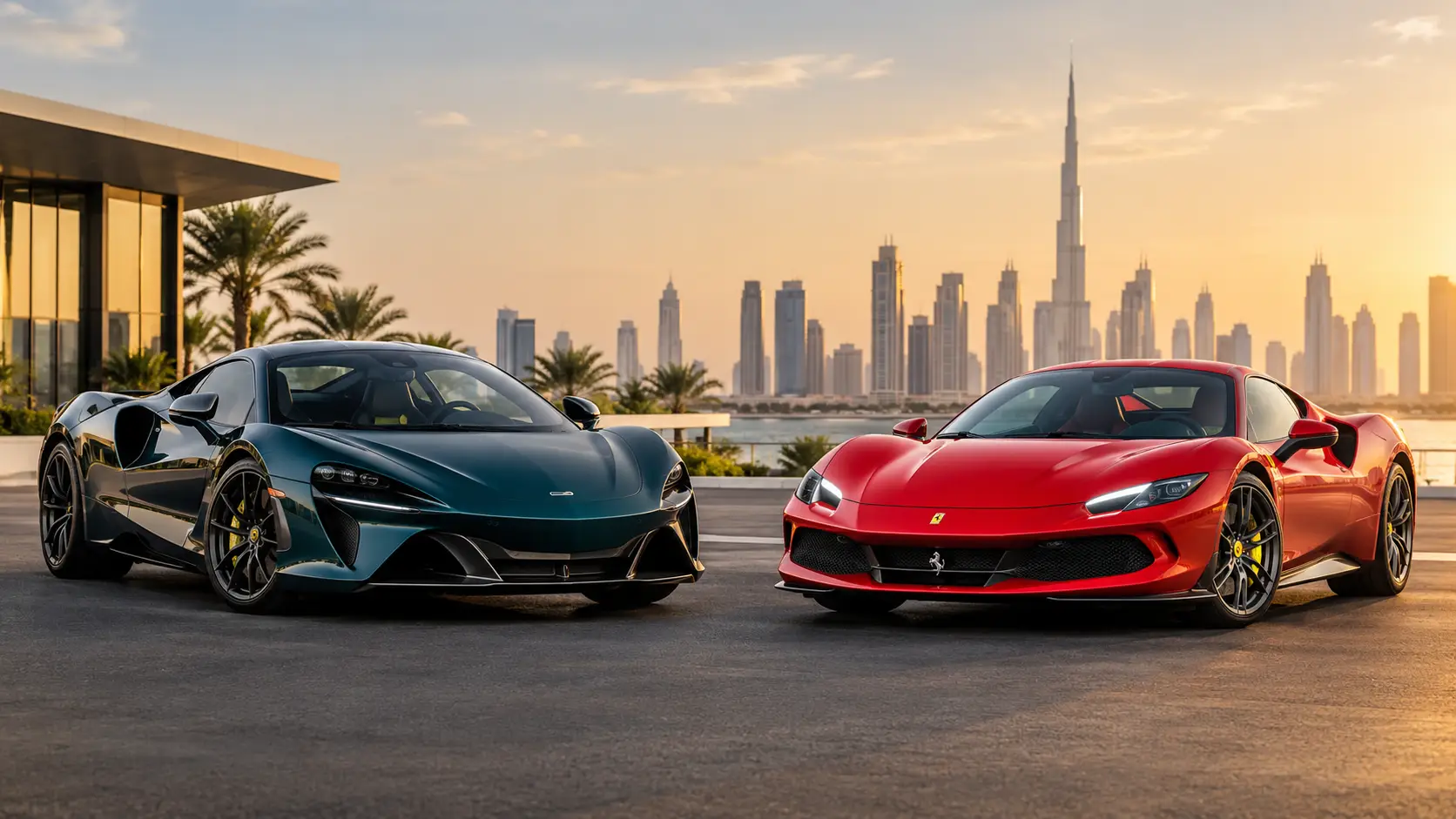
The McLaren Artura and the Ferrari 296 GTB represent a defining moment in supercar engineering. Each pairs a compact twin-turbocharged V6 with plug-in hybrid technology, and each is built for the discerning driver who expects exceptional performance without compromise. Yet the two marques reach that goal by very different routes: McLaren through precision and lightweight engineering, Ferrari through power and emotion.
This comparison examines how the two cars differ in performance, technology, design and ownership value, with practical guidance for buyers in Dubai.
Meet the Contenders
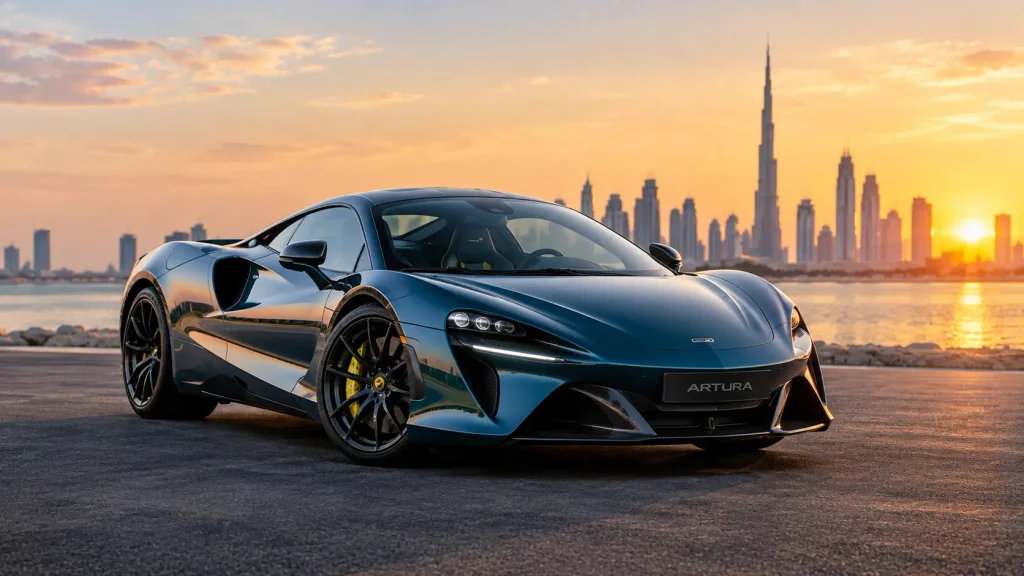
The McLaren Artura marks the start of a new era for the Woking marque. It is the brand’s first series-production hybrid supercar, built around a lightweight carbon-fibre monocoque and powered by a 3.0-litre twin-turbocharged V6 working with an electric motor. Total system output is approximately 671 hp, delivered to the rear wheels through an 8-speed dual-clutch automatic. The result is a car that is light, precise and engineered around driver feedback.
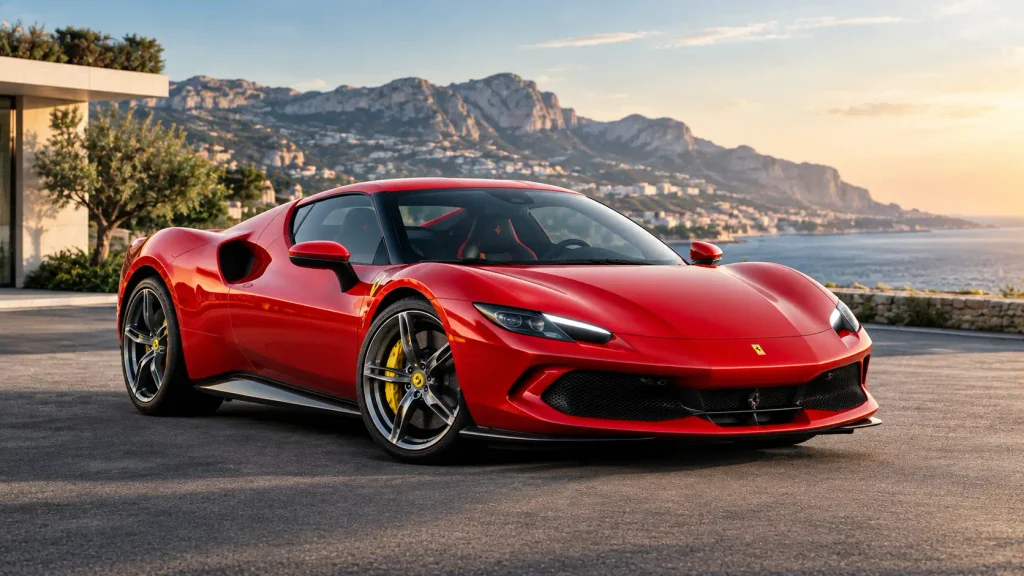
The Ferrari 296 GTB takes a bolder route. Its 2.9-litre twin-turbo V6, set at a 120-degree angle, is paired with a rear-mounted electric motor. Combined output is roughly 819 hp, also sent to the rear wheels through an 8-speed dual-clutch gearbox. It is a car that proves a V6 can carry the Prancing Horse badge with real emotion.
Published specifications vary slightly by model year, market and configuration, so buyers should confirm exact figures for the specific car they are considering.
Performance: Precision vs. Power
On paper, the Ferrari holds the advantage. With roughly 150 hp more than the Artura, the 296 GTB is quoted at around 2.9 seconds to 100 km/h against roughly 3.0 seconds for the McLaren. Both exceed 330 km/h at the top end. The gap is narrow, and on a Dubai highway, in an empty tunnel or on a track day, neither car will leave you wanting.
What separates them is how that performance is delivered. The Ferrari is explosive: the hybrid system and turbochargers combine into a surge that feels almost electric in its immediacy, followed by a V6 soundtrack that is anything but muted. The Artura is more measured. Its electric motor fills the gaps in the torque curve, so response is instant, but the car’s lower weight means it feels agile and tidy rather than overwhelming. One rewards the driver with drama; the other rewards the driver with accuracy.
Handling and Driving Character
McLaren’s reputation rests on steering feel, and the Artura continues that tradition. The carbon monocoque provides a rigid, lightweight foundation, and the car communicates clearly through the wheel. The rear-wheel-drive layout keeps the experience pure and driver-focused, and the drive modes allow it to shift from calm to aggressive in seconds.
Ferrari answers with sharpness and a sense of occasion. The 296 GTB’s short wheelbase makes it eager to change direction, and its chassis electronics are tuned to make high limits feel approachable. The Assetto Fiorano specification, as featured on the example Verano Motors lists, pushes that further. It adds Multimatic suspension, titanium springs and carbon-fibre racing seats, all aimed at reducing weight and sharpening dynamics for those who intend to use the car hard.
Hybrid Technology and Everyday Usability
Both cars use plug-in hybrid systems, but neither is designed to compromise the experience. The electric motors exist primarily to enhance response and efficiency, while quiet electric running is a useful bonus for low-speed manoeuvres, early-morning departures and residential streets.
In practice, both are considerably more usable than the supercars of a decade ago. Each offers a touchscreen display, smartphone integration and modern driver aids. The Artura has a reputation for approachability, and McLaren has deliberately engineered it to be a supercar you can drive in city traffic without fatigue. The Ferrari delivers the same composure with a more theatrical personality.
Design and Cabin
Visually, the two could hardly be more different. The Artura is sculpted and technical, with aerodynamic surfaces that look as though they were shaped by airflow rather than fashion. Carbon accents, including the Carbon Package on the Verano example, add to its purposeful appearance.
The 296 GTB is pure Ferrari: compact, muscular and unmistakably Italian. A red-on-red specification such as the one at Verano Motors makes no attempt at subtlety, and that is rather the point. Inside, Ferrari favours a driver-centric cockpit with a digital instrument cluster and controls mounted on the steering wheel, while McLaren pursues clarity and minimalism. Neither cabin is objectively superior; they simply reflect different ideas of what a supercar should feel like.
Ownership Considerations in Dubai
Buyers evaluating either car in the UAE should look closely at specification (GCC, Japanese or European), service history, warranty status, mileage and overall condition. A comprehensive service contract can significantly influence long-term ownership costs on a supercar. For a deeper look at the factors that matter most, read our guide on what reduces luxury car value the most.
Value is where the comparison becomes particularly interesting. Verano Motors’ own buying guidance points to savings in the region of 30–40% on depreciation when choosing a pre-owned luxury car, with no sacrifice in performance or prestige. The Artura illustrates the point well: a 2023 example offers modern technology, sensible mileage and the remainder of its warranty at a price well below that of a new supercar. The 296 GTB, by contrast, appeals to those who want a factory-fresh car with no previous owner and the rarity of a true zero-kilometre example.
Dubai’s climate is also worth considering. Cooling, tyre condition and brake wear deserve attention on any high-performance car, and a proper pre-purchase inspection and diagnostic scan are always advisable. Verano Motors encourages both.
Verano Motors’ Current Inventory
Verano Motors, a Dubai-based luxury car dealer with European sales experience, currently lists both cars:
- 2023 McLaren Artura Performance (GCC Specs): 3.0L twin-turbo V6 plug-in hybrid, RWD coupe, 18,000 km, Carbon Package, warranty and service contract included, listed at AED 679,000 (finance from AED 9,500 per month).
- 2024 Ferrari 296 GTB Assetto Fiorano (Japanese Specs): hybrid twin-turbo V6, 0 km (brand new), red exterior with red interior, extended carbon specification, listed at AED 1,099,000 (finance from AED 17,000 per month).
Each listing includes complete specifications, clear pricing and full documentation, so you can shortlist with confidence and book a viewing when you are ready.
Who Each Car Is For
The McLaren Artura suits the driver who values precision, lightness and steering feel, and who wants a supercar that is as comfortable on the commute as it is on a mountain road. It also represents a considerably more accessible entry point into modern hybrid supercar ownership.
The Ferrari 296 GTB suits the driver who wants maximum performance, a strong sense of occasion and the emotional pull of the Ferrari badge, especially in a brand-new, track-focused specification.
Ultimately, the question is which experience you want: composed and exacting, or dramatic and uncompromising.
Quick Specification Comparison:
| Specification | McLaren Artura | Ferrari 296 GTB |
| Engine | 3.0L Twin-Turbo V6 PHEV | 2.9L Twin-Turbo V6 PHEV |
| Combined Power | ~671 hp | ~819 hp |
| 0–100 km/h | ~3.0 seconds | ~2.9 seconds |
| Top Speed | 330 km/h | 330+ km/h |
| Transmission | 8-speed Dual-Clutch | 8-speed Dual-Clutch |
| Drivetrain | RWD | RWD |
| Body Style | 2-door Coupe | 2-door Coupe |
| Verano Listing | 2023, 18,000 km, AED 679,000 | 2024, 0 km, AED 1,099,000 |
Frequently Asked Questions
1. Which is faster, the McLaren Artura or the Ferrari 296 GTB?
The Ferrari 296 GTB is quicker on paper thanks to its higher combined output, though the gap in real-world driving is small.
2. Are both cars plug-in hybrids?
Yes, Each pairs a twin-turbocharged V6 with an electric motor and a plug-in battery system.
3. Does Verano Motors accept trade-ins?
Yes, Verano Motors accepts luxury cars as trade-ins toward your next purchase, with a clear evaluation and fair market offer.
4. Can I finance a supercar in the UAE?
Verano Motors works with several UAE banks that specialise in luxury vehicle financing. Terms and conditions apply.
5. Does Verano Motors accept cryptocurrency?
Yes, Payments can be made in Bitcoin (BTC), Ethereum (ETH) or Tether (USDT), alongside bank transfer and cash.
Find Your Supercar at Verano Motors
Whichever way you lean, both cars are available for viewing in Dubai. Browse the full McLaren collection, explore our complete inventory, or book a viewing to see the Artura and the 296 GTB in person. If you are looking to sell, request a valuation for a clear, market-based offer.